
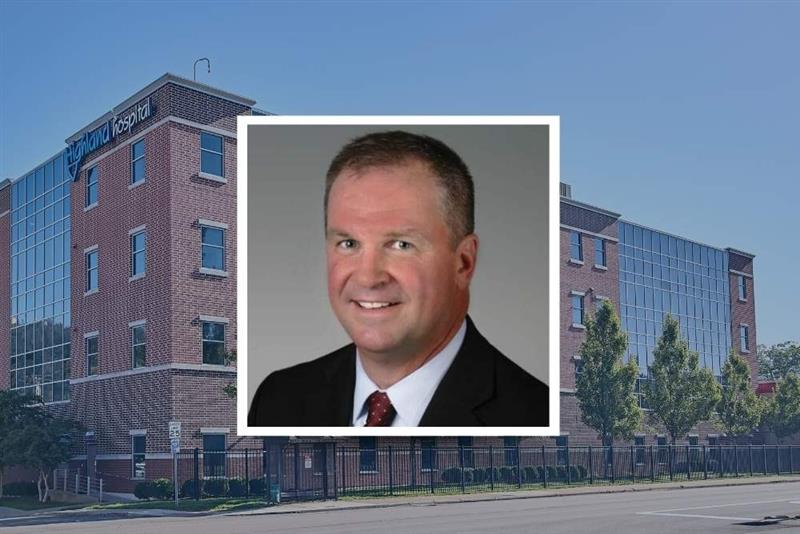
Tell me a bit about your background.
I was born and raised in West Virginia and attended West Virginia University, where I met my wife. Healthcare administration has really been my life’s work. I started out as a hospital CFO and was later promoted to CEO, a role I held for about five years. After that, I decided to try something different and launched a physician services company that handled billing, accounting, and HR functions for private practices. I did that for about 15 years. Then the opportunity at Highland Hospital came along, and it felt like the right time to return to hospital leadership.
What drew you to Highland Hospital?
Before coming here, I actually ran a hospital that was a direct competitor to Highland. That gave me a strong understanding of the region, the patient population, and the behavioral health landscape. I knew the facility, I knew the challenges, and I felt confident I could do a good job here. Highland is doing some really important and innovative work, and the opportunity to be part of that was very appealing.
What originally drew you to mental healthcare?
Earlier in my career, I worked at River Park Hospital from 1998 to 2009, so I’ve been closely connected to the mental health space for a long time. I also served on the board at Prestera Center, which deepened my understanding of the needs in this field. Behavioral healthcare is complex, but it’s incredibly meaningful work.
How would you describe Highland Hospital’s mission, and what makes it different from other behavioral health facilities?
In West Virginia, there are only a couple of non-state operated psychiatric hospitals like Highland. The state-run facilities handle some of the acute needs, but Highland fills a unique niche, particularly in serving adolescents. We’re an important piece of the puzzle in the state’s mental health system.
Our mission is to continue expanding our role in the community and strengthening partnerships with other providers and agencies. We want to make sure that everyone involved in caring for these patients is working together so people get the support they need.
What do you wish more people understood about behavioral health hospitals?
Stigma is still one of the biggest challenges. For many people, behavioral health hospitals feel like a “black hole” — something they don’t understand and may fear. That’s why outreach is such a big initiative for us. We’re going into school systems, providing education, and talking openly about the services we offer.
We also invite referral sources and community partners into the building so they can see what we do firsthand. The more people understand, the more comfortable they are. Almost everywhere you go, someone has had a family member here or knows someone who has. Mental health touches every community.
How is Highland evolving to meet changing behavioral health needs?
We’re very focused on growth. We’ve built strong relationships with state-run facilities and are working on a program that would add 24 additional beds to help with overflow. We are also adding an additional 42 acute beds to our facility. The goal is to become the largest non-state behavioral health facility in West Virginia so we can make sure access is available when people need it.
We also operate detox services, which is an important part of meeting the broader behavioral health and substance use needs in our community. We continue to look for new opportunities to expand our behavioral health footprint in the state.
If someone is hesitant about seeking mental health treatment, what would you say to them?
A lot of that hesitation goes back to stigma. There is nothing wrong with having a mental illness. We’re part of the continuum of care, and we serve people in crisis, often some of the most difficult patients, and help stabilize them.
When patients are here, they are safe. We have quality staff and physicians who work hard to help people transition back to the community. We focus on creating a supportive environment, and even things like food and surroundings matter. We’re here to help people get better and move forward with their lives.
Highland Hospital has a long history in Charleston. What do you see on the horizon?
We want to be the key behavioral health facility in West Virginia — known for quality care and strong partnerships. Our focus is on continuing to grow our footprint and finding new ways to meet the needs of the people of West Virginia. We want to be the best at what we do while also being a strong team player in the state’s healthcare system.
What stands out to you about working at Highland?
One thing that struck me when I first arrived was how many employees have been here for a long time. That says a lot. This isn’t easy work — caring for behavioral health patients takes special talent and dedication. We’re focused on making Highland a place where people want to work and stay. Being a great employer is a top priority because keeping talented staff is essential to quality care.
On a personal level, what excites you about this stage of your career?
I’m toward the later part of my career now, and I’m a different person than I was 15 years ago. I see myself as someone who can mentor younger members of the leadership team and help develop the next generation. My goal is to help get this organization — and its leadership — to a point where they’re ready to step up, take over, and continue the mission long after I’m gone.
Highland is already a great facility, and it has the potential to be even better. Being part of that growth is very rewarding.